
The Narrator’s Changing Self-Image
Winter in SokchoThis flow traces the narrator’s struggle to see her own body apart from other people’s judgments and desires.
increasing Bearing strength in each event
 decreasing
Bearing strength in each eventdecreasingA Photograph from Behind
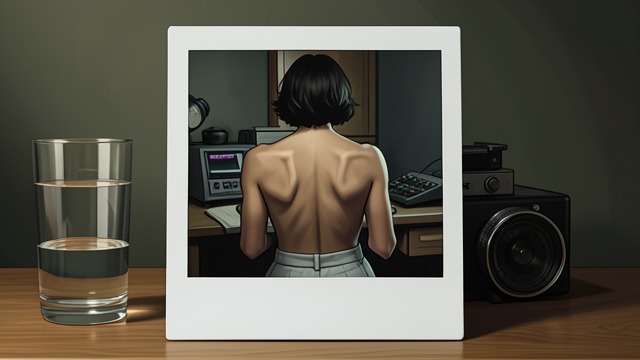
A Photograph from Behind
An unfamiliar view
Jun-oh takes a Polaroid of the narrator before leaving, and she later sees her hips, ribs, and shoulder blades from behind. The image surprises her because she has never seen herself from that angle.
She recognizes the body in the photograph only as something that belongs to her, not as a familiar self-image.
A new measure
The photograph becomes another measure by which she judges her shape. Its perspective troubles the apparent certainty of what she thought she looked like.
The Bathing Mirror
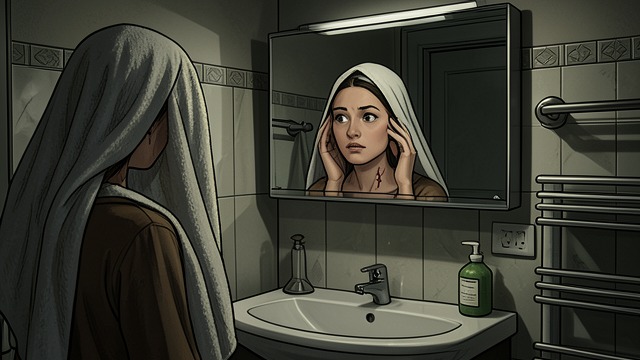
The Bathing Mirror
Looking without glasses
After moving into a room beside Yan Kerrand’s, the narrator bathes and decides she will stop wearing glasses around him. She believes the lenses make her eyes look small and her face look like a rat’s.
When he sees her leaving the bathroom, she becomes acutely conscious of her exposed scar and body.
Other people’s gaze
Her self-scrutiny is bound to the possibility of being looked at. Even an almost imperceptible glance from Yan Kerrand becomes material for embarrassment and imagined judgment.
The Proposed Surgery
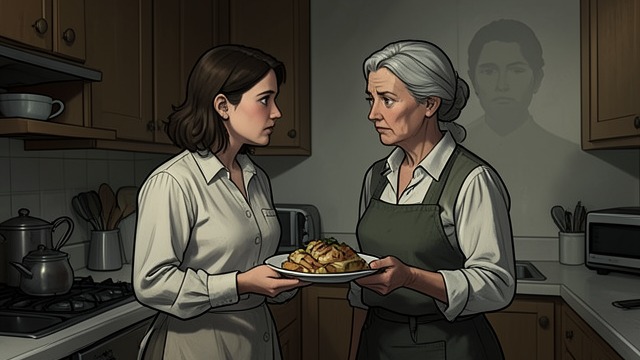
The Proposed Surgery
Advice as pressure
The narrator’s mother offers money for an operation, suggesting it might improve the narrator’s chances of getting a better job. The offer resembles Jun-oh’s earlier advice that she consider changing her face.
The narrator asks whether her mother thinks she is ugly, exposing the hurt beneath the practical proposal.
Refusing the premise
The narrator’s mother insists that she is beautiful as she is, but the suggestion remains unsettled. The scene shows affection sharing a language with appearance-based pressure.
Failed Contact Lenses
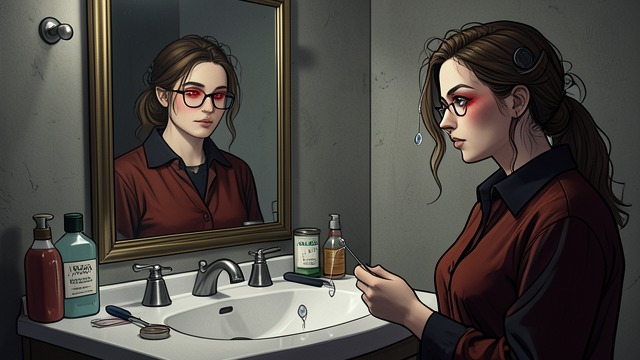
Failed Contact Lenses
Trying to change her appearance
The narrator buys contact lenses and attempts to wear them before meeting Yan Kerrand. One blurs her vision and the other will not stay in place, so she finally puts her glasses back on.
She is late and flustered, caught between wanting a different appearance and the practical discomfort of achieving it.
Returning to herself
The failed attempt does not settle how she wants to be seen. Her return to glasses is a small, reluctant acceptance rather than a confident rejection of others’ standards.
Ink Across the Face
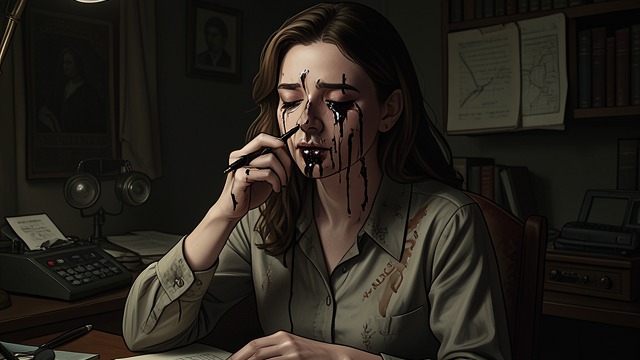
Ink Across the Face
Entering the artist’s room
After learning that Yan Kerrand will leave, the narrator enters his room while he is away. She finds a discarded drawing of a woman and wants to see the figure made fully alive so she can destroy it.
Instead, she dips her finger in ink and traces her own forehead, nose, cheeks, chin, and collarbone.
A painful self-image
The ink runs into her mouth and sticks her eyelids together. She must pull out her eyelashes to open her eyes, turning the attempt to inhabit an image into a painful act of self-alteration.
The morning Jun-oh leaves for Seoul
During the guest house’s cold spell
During a visit to the bathhouse
Before the café meeting with Yan Kerrand
After Yan Kerrand announces his departure
